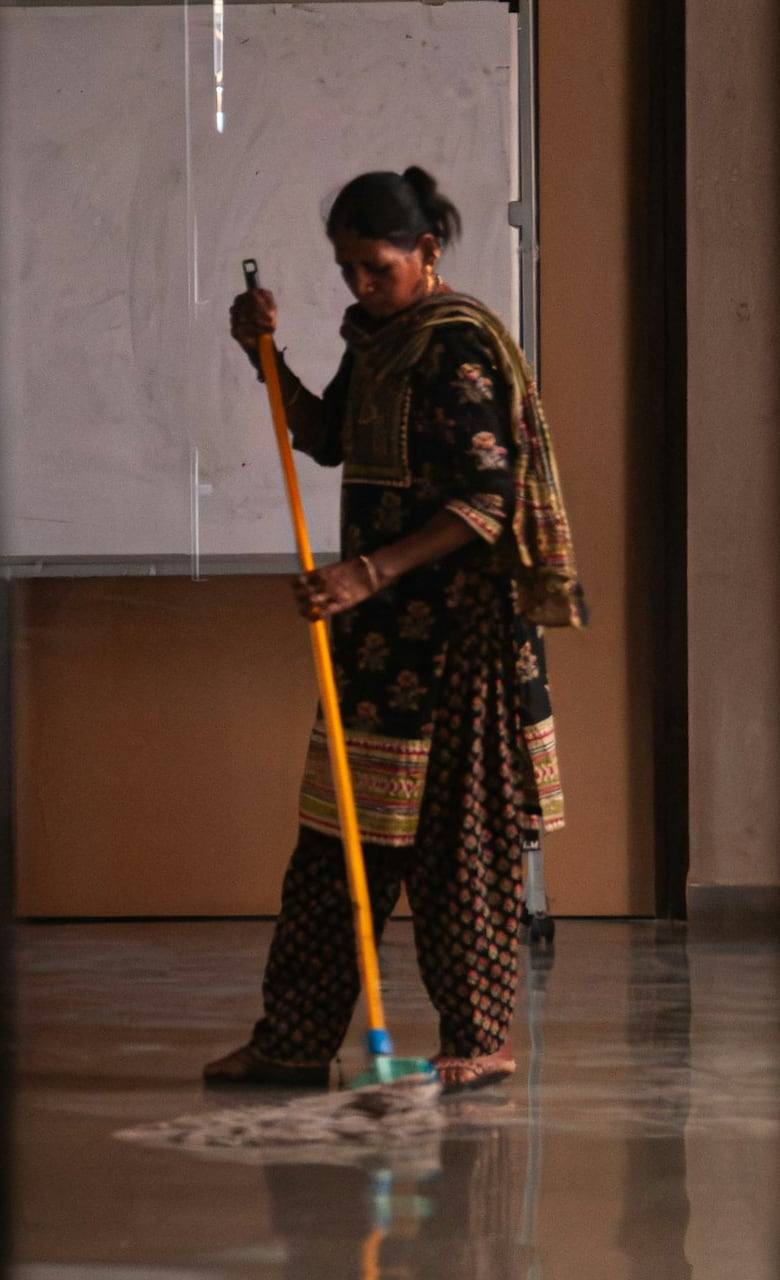
Most complaints about office cleaning are not about effort. They are about tasks nobody owns: the pantry sink that fills up by lunchtime, the washroom that runs out of soap at 4 p.m., the dust on top of the cabinets that no one has touched in months. A written checklist fixes that by making every task someone’s job, at a set frequency.
How to use this checklist
Treat the tables below as a starting point. Adjust them to your office’s size, footfall and working hours.
- Assign each task to a person or a shift.
- Put the daily washroom and pantry checklists on the wall, with a column to sign each round.
- Have the housekeeping supervisor check the list every day, and the admin team review it weekly.
Daily tasks
These keep the office presentable and hygienic every working day.
| Area | Task | When |
|---|---|---|
| Entrance and reception | Sweep and mop, clean the glass doors, dust the front desk | Before office opens |
| Workstations | Empty bins, wipe desks that are clear, dust partitions and monitors gently | Morning |
| Floors | Vacuum carpets, mop hard floors, spot-clean spills | Morning, then as needed |
| Washrooms | Clean toilets, basins and mirrors, mop floors, refill soap, tissue and hand towels | Several rounds a day |
| Pantry | Wash the sink, wipe counters, clean the microwave and fridge handles, empty bins | After breakfast, lunch and evening tea |
| High-touch points | Sanitise door handles, lift buttons, railings, switches and shared phones | At least twice a day |
| Meeting rooms | Clear cups, wipe tables, arrange chairs, clean whiteboards | After each meeting or twice a day |
| Garbage | Segregate wet and dry waste and move it to the collection point | End of day |
Washrooms deserve special attention. One cleaning round in the morning is not enough for a busy floor. Agree on fixed rounds, and make sure they are signed.
Weekly tasks
Weekly tasks stop dirt from building up in places the daily routine misses.
- Dust ledges, window sills, cabinet tops and picture frames.
- Clean the inside of the pantry fridge and throw away old food, with notice to staff.
- Wipe glass partitions and internal windows on both sides.
- Clean chair bases and desk legs.
- Descale washroom taps and showerheads where water is hard.
- Polish brass, steel and glass fittings at the reception.
- Check and restock the housekeeping store, noting what is running low.
Monthly tasks
These are deeper cleaning jobs that usually need extra time or a machine.
- Machine-scrub hard floors and clean grout lines.
- Shampoo high-traffic carpet areas.
- Clean light fittings, fans and AC grilles (coordinate with the maintenance team).
- Wash dustbins inside and out.
- Deep-clean the pantry: behind the fridge, inside cabinets, the water dispenser.
- Clean the outer surfaces of electronic equipment, following safe cleaning methods.
Quarterly and seasonal tasks
Some jobs only come round a few times a year, but they make a visible difference.
- Deep-clean upholstery, sofas and fabric chairs.
- Clean external glass and facades, using trained staff and proper safety equipment for work at height.
- Pest control, coordinated with a licensed provider.
- Water tank cleaning, where the building does not handle it.
- Before the monsoon, check for damp patches, clean drains and keep extra mats and wet-floor signs ready.
- After the monsoon, treat mould and musty smells, especially in basements and storerooms.
Materials and equipment to plan for
A checklist only works if the team has what it needs. Plan for:
- Chemicals: floor cleaner, glass cleaner, toilet cleaner, disinfectant and degreaser for the pantry, each used at the right dilution.
- Consumables: hand wash, tissue rolls, hand towels, garbage bags, air fresheners.
- Tools: colour-coded cloths and mops (separate ones for washrooms and pantries), buckets, wringer trolleys, dusters, squeegees.
- Machines: vacuum cleaners, scrubber-driers for large floors, wet-dry vacuums.
- Safety: gloves, masks and wet-floor signs.
Colour coding matters. A cloth used in the washroom should never be used on a pantry counter.
How to check the work
A simple daily walk-through with the housekeeping supervisor catches most problems. Check the washrooms at random times, not just first thing in the morning. Look up, at fans, ledges and AC grilles, as well as down. Ask employees once a quarter what they would improve.
If the same problem comes up again and again, it is usually a planning issue: not enough staff at peak times, missing materials, or a task that nobody owns.
Outsourcing your housekeeping
A professional housekeeping agency brings trained staff, a supervisor, materials and machines, and replaces absent staff quickly. It also takes care of wages, PF and ESIC. For a busy office, that is usually simpler than managing an in-house team.
Aryan Facilities provides uniformed housekeeping teams for offices and workplaces, including in Mumbai, Pune and Ahmedabad. See our housekeeping services and pantry and office support, or get a free quote.